02.22.10

Open Source JSON Can’t Compare to Three-legged Belizean Monkeys

Posted in Software Development at 8:13 am by sam

Poor, neglected blog. Normal life as an Indianapolis software developer just isn’t as exciting to write or read about as three-legged dog-riding monkeys in Belize. Be that as it may, I do have a little something to share with the world today…and hopefully we’ll have more entertaining travel stories in the near future.

Geek Post Warning – those of you who are here for entertainment and are not particularly fond of the geeky software talk might want to skip the rest of this post.

I’ve been doing quite a bit of side development with Google App Engine for Java and the Restlet 2.0 framework as a backend server for a couple of different iPhone projects lately — Google App Engine is badass technology suite for web developers, but more on that some other time. JSON is a pretty important data interchange format for iPhone development, so I tried out a whole bunch of Java-to-JSON and JSON-to-Java serialization/deserialization open source libraries. There are plenty of options and lots of strengths and weaknesses to compare and contrast, but I eventually settled back on the first JSON serialization framework I learned, the JsonPlugin for Struts 2. One problem…I’m doing Restlet work now, not Struts 2. It turned out to be not too difficult to remove the Struts dependencies from the JsonPlugin code, however, and I’ve decided to release my changes back to the open source community under the Google Code project named “json-libre” – it’s the Struts2 Json Plugin code, freed from its dependence on Struts. Head nod to Garrett for helping me come up with a name.

Check it out here: http://code.google.com/p/json-libre/

I’m not crazy about forking projects, so I wrote the Struts Development team to see if they’d be interested in somehow making this part of the normal codebase. If I hear back from them and they’re interested, there’s a chance that this project might get deprecated and moved back into their codebase. For now it’s out there and free for your use.

06.29.09

Saying Goodbye and Summing Up

Posted in Travel at 6:00 am by Shannon

Since we’ve been back home in Indianapolis, we’ve had lots of questions from our friends and relatives about our trip.  We love to talk about our experiences, but it’s really difficult to sum them up concisely.  We didn’t have one favorite country–we loved them all in different ways.  Belize’s vim and vigor stole our hearts.  Guatemala’s turbulent history–much of it thanks to our very own CIA–made us cry, but its gorgeous river canyon and lovely waterside dwellings warmed our souls.  We fell in love with Costa Rica’s gorgeous central highland region, probably because its cool breezes and cloud forests gave us a welcome break from the 98% humidity of 95-degree tropical temps.  Nicaragua–the biggest surprise of all–was delightful in every way, and it’s a place we’d like to return to in the future.  Jamaica’s beautiful beaches and reggae welcome made us smile.  The Panama Canal blew our minds…twice!

But all the wonderful archaeology, flora, fauna, literature, history, cuisine, and gorgeous terrain cannot hold a candle to the people we met on ship and shore.  In every port, we encountered friendly faces and learned something new about the land and ourselves. We drank up sunlight, moonlight, starlight, and the sound of the ship moving through the ocean with our awesome shipmates.  We saw the Southern Cross for the first time! We solved all the world’s problems together on decks 4, 5, and 6 aft, and it’s weird to go back to normal, everyday life after all that.  The MV Explorer is part of our history now.  Our experience on the ship is forever defined by the wonderful souls we got to know on board.  It was the people, rather than the itinerary, that made this the trip of a lifetime…so a photo montage of them seems appropriate right about now. It takes a while to load, and remember to turn your volume down or plug in your earphones if you’re at work!

Passage Through Panama from Sam and Shannon Bloomquist on Vimeo.

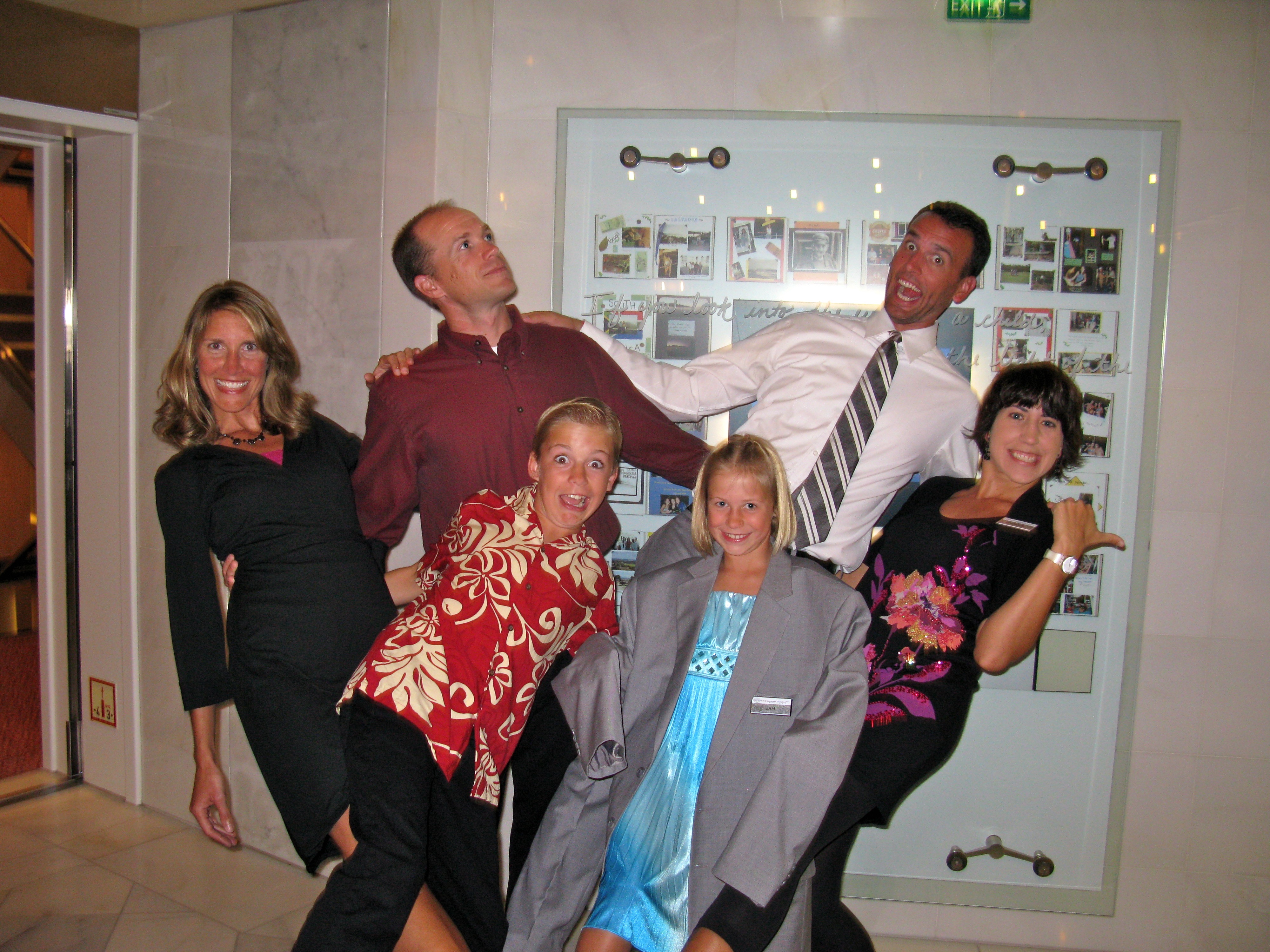
Eleven-year-old Nick Whittaker is the voracious reader/poet extraordinaire you see with us in the photo below. To end this final post about our fantastic voyage, we leave you with the poem he wrote just before disembarking from the ship for the last time. The blag will go blagward. It just won’t be about sailing through the Panama Canal anymore. But, we still have our memories…and the rest of our lives to get back to the MV Explorer for, as Iain says, another “taste of the lotus flower.”

nick

It’s time to say “bye”
To the MV Explorer
Our lovely experience
Is now all but over
It’s hard to leave
This wonderful cruise
‘Cause this is the one ship
We always would choose
To sail us across the sea
And go to many places
Like Belize and Jamaica
And see many new faces
So we are sad to leave
Even shed a tear or two
MV Explorer
We’ll always miss you
–By Nick Whittaker–

06.09.09

Animal Welfare in Latin America

Posted in Travel at 9:42 am by Shannon

Much of our Latin American voyage has been fascinatingly, breathtakingly beautiful, but there are a few things we saw that broke our hearts. One is the living conditions of animals in nearly every country we’ve visited. When the people themselves are struggling to eke out an existence, animals get bumped down on the priority list or are neglected altogether. Sometimes, they are pointedly abused. We understand that the closer people in these countries move towards greater economic, environmental, and social success, the closer stray domesticated or wild imprisoned animals come to a chance for a happy life. You might remember our photos of Gumbo the monkey at Jaguar Paw in Belize, the dolphins at Anthony’s Key in Roatan, or Buttercup the sloth in Costa Rica. These are the bright spots of our trip–Latin American organizations that are setting a positive example by treating animals humanely. Everything was not, unfortunately, all sweetness and light:

We saw skinny, mangy dogs in every country completely ignored or kicked away by children and adults. In the countryside and the cities, we found sickly monkeys, goats, dogs, chickens, pigs, and donkeys tied by their necks to trees with no more than a couple feet of give on the rope. Ferral cats were everywhere, and like the dogs, they all exhibited symptoms of severe skin and eye disease and malnourishment. Some dogs and cats would come to us when offered food or love, but most shrank away in fear.  Animals born to be companions were hurting, and animals born to roam the wild were tied up. The worst of it? Tourists–mostly American–pay to keep wild animals in their obvious misery. A few dollars for a photo opportunity or a chance to pet a wild or exotic animal, and in return that animal is caged and used for income. Upon death it is replaced with another…and the cycle continues.

This problem is not unique to the Caribbean or Latin America, and animal welfare organizations exist there like they do here–but fewer, with much less funding and almost no public support. See World Animal Net’s Country Directory for contact information. Animal welfare issues are a worldwide problem, and several international organizations are working to improve the situation by promoting awareness and supporting local groups in each region of the world that work to make a difference:

Words cannot do justice to what we saw, but maybe the above photographs will help you to see through our eyes on the trip.

06.06.09

Life’s a beach.

Posted in Travel at 7:15 am by Shannon

Life on the ship was crazy busy during the last couple of days of our voyage, so we had little time to blog and reflect. Good thing we missed our connecting flight to Indy thanks to rain delays in Fort Lauderdale. We finished the Belize post! Good thing our bags didn’t make it on the plane with us to Indianapolis…it gives us a reason to take advantage of the free Wi-Fi at the Indy airport to write this post! As a certain someone’s cell phone ring suggests, always look on the bright side of life. :)

From the moment we stepped back on the ship after Belize, the computer lab was hopping with tons of people needing help checking e-mail, confirming airline reservations, and printing out boarding passes. Oh yeah–did we mention that Sam was hired to work in the ship’s computer lab while at sea for the last two weeks of this trip? This was way cool because:
a) Sam received a much-coveted “red shirt” and was entitled to all the privileges and benefits therein
b) We are much more “hire-able” for future voyages now that we both have experience working on the ship

I was also swamped with a surprising number of in-depth reference questions, computer questions (though I only cover 2 computers to Sam’s 20-some) and a never-ending stack of books to re-shelve in the library. Among this chaos, we still had one more port to enjoy: Jamaica, mon!! And did we ever.

debbie_red_stripe

After taking many wonderful but highly structured day-long tours in each port, Sam and I just wanted time in Jamaica to max and relax with fellow staff and a few of the ship’s awesome lecturers. Because it’s such a popular spot for tourists, we were all a bit surprised to find a pretty healthy reef with great snorkeling at a small but beautiful beach in Montego Bay called Doctor’s Cave. We spread our towels under a shade tree and inherited some rented chairs and umbrellas from fellow shipmates who left them behind. Warm sun, refreshing aquamarine waves, Red Stripe beers, lunch delivered to our beach camp, delish Piña Coladas, and great music (thanks to Courtney’s pink power radio) made for one of the most restful and relaxing days of the voyage. It was a great way to wind down our month at sea, and it just proved to us even more that, while all good things must come to an end, it’s never easy to say goodbye. So, we didn’t. We just had some fun and saved the goodbyes for June 5.

michelle_court_postmodern_snapshot

sam_ricardo_beach

jammin_in_the_port_terminal

06.05.09

Totally Tubular

Posted in Travel at 4:58 pm by sam

Back in Belize for a second visit, we hired a cab to travel up into the jungle and go cave tubing (floating down a jungle stream and through a number of large caves on inner tubes). The trek through the jungle to get to the start point for the tubing inspired us to make an 80’s butt rock music video of our experiences, but it will necessarily be rated R (hey–it’s Guns ‘n Roses–what other rating can it have?) so we won’t be posting it on the blog. The video is still in “post-production,” but it will be available upon request for those of you with less refined sensibilities.

rocking_tubes

The tubing experience itself was awesome and definitely felt like a Goonies adventure — “That’s what I said, booty trap!” The water was aqua, and the caves grew very dark in the middle so we all wore headlamps. The inside of the caves was a beautiful orange color, and bats and spiders were hanging out on the ceilings. Singing “Thriller” and other great songs through the caves with Courtney, Aaron, Graham, and our guide Miguel made the whole experience even more fun. When we arrived back at the Jaguar Paw Resort, we were charmed with the place. We had a traditional Belizian lunch and hot chocolate (we were all a little cold after floating through dark caves for 2 hours). We all decided that the resort, which is really more like a retreat and quite affordable, would be worth another trip back to Belize.

hot_chocolate

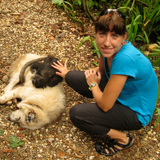
In addition to the tubing, a highlight of the day was a three-legged rescued howler monkey named Gumbo. He was raised with a pack of puppies and spends his days alternating between riding around the jungle on the back of his favorite canine companion and sneaking into cab vans when visiting touristas aren’t looking. After we had lunch at the hotel where he hangs out, we caught him snuggled up and taking a siesta with his doggy brother. He’s such a cute little guy. He even let Shannon pet him and scratch his back a little bit.

gumbo

shannon_petting_gumbo

06.03.09

Dolphin Smooches

Posted in Travel at 4:54 am by sam

Eeeeeaaaaheeeeee-e-e-e—eee–eeee-ahEEEE-EE-EE!!! That’s dolphin for “I like fish. I want some more! I will kiss your sweaty face if you’ll give me some FIIIISH!!!” And on our second visit to the island of Roatán in Honduras, we learned a little bit of dolphin from our new water-bound mammalian pal, Anthony. Anthony is a 3-year-old male dolphin who lives at the dolphin education and research center at Anthony’s Key Resort. You might think that sharing a name with the key and the resort itself would give him an out-of-control ego, but Anthony lives in a pod of 20+ dolphins. He’s still a calf, and he’s learned to keep any egotistical tendencies in check because most of his companions are older and larger than he is. If you’re only a measly 200 pound three-year-old, you don’t want to mess with the 26-year-old big papa of the pod who weighs in at a hefty 600 lbs.

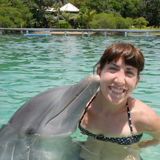
Anthony’s Key is a really cool place because all of the dolphins live in the Caribbean Sea rather than Sea World-esque tanks. They are cared for and observed by marine biologists doing behavioral studies out in the open water. Anthony, though, was born in captivity and lives in a huge area cordoned off with underwater nets that allow smaller fish to swim in and out. The staff is committed to providing dolphin-human interactions on the dolphins’ own terms. Being naturally curious, dolphins have a friendly and fun demeanor that leads to easy-going socializing with humans. We tried to sign up for the encounter and the snorkeling session, but only the encounter was open. In the snorkeling session, humans get to swim around freestyle with the dolphins for a half hour. The dolphins do not perform “tricks” and therefore are given no rewards–their nature takes over and they just have a good time. So, we were able to participate in an encounter session where a trainer helped us to hold Anthony and also receive kisses from him. He, in turn, received tasty fish for his efforts. A little fish seems a fair payment for smooching on what is often a sweaty sunscreen-slathered homo sapien. (After our turn, however, Anthony clicked and whistled to me that he’d have been happy to smooch on the ship’s librarian even without the fish.)

shannon_dolphin_kiss

sam_shannon_dolphin

Quite a few of Anthony’s pals and cousins were swimming around us while we petted and played with him. Occasionally, one or two of the other dolphins would come rushing up to us, interrupting one of Anthony’s many astounding tricks and inviting him to swim away for a few minutes. Anthony didn’t take much convincing. After Anthony’s trainer described him as “mischievous,” we quickly figured out that he is really just a teenage rascal within the pod social structure. That made us love him all the more, so of course we all clapped and cheered like crazy to encourage his misbehavior.

dolphin_jump

We rounded out the day with a trip to the West Bay beach, where we snorkeled and enjoyed beach life with quite a few of our MV Explorer shipmates, including the previously mentioned Piano Man, Bob Falstein:

bob_beer_beach

05.31.09

How d’ya like them (pine)apples?

Posted in Travel at 5:34 am by sam

Remember that episode of Sesame Street where they show a trip to the crayon factory? That was always one of Shannon’s and my favorites. On our final visit to Costa Rica (back on the Caribbean side again), we toured a pineapple plantation and put together our own clip to show how pineapples are processed and packed up to be shipped around the world.

There are four grades of pineapple ripeness and shape that determine what happens to any given pineapple on the farm. Grade 1 fruits get shipped to the U.S., Canada, and Europe. Grade 2 are too ripe to be shipped and are sold in the local markets. Grade 3 are sliced and dried, and grade 4 are sent straight to the juicer. In addition to an interesting trip through the production facilities, we sampled more than our fair share of this fruit which symbolizes welcome and hospitality. We had fresh grade 2 pineapple, fresh grade 3 pineapple, grade 3 pineapple that was warm from having been in the drying ovens for about 4-6 hours (that was our favorite), and fully dried grade 3 pineapple. Our stomachs and taste buds were about to burst with all the fruity goodness we consumed. As you’ll see from the video, we also walked around the factory. We felt like we were in everyone’s way, but the workers were so kind and smiling and they just worked around us with speedy dexterity. Ticos seem to be a very friendly and happy bunch of people. We learned so much, but the main lesson we’ll take with us is to warm the grade 1 pineapple we buy at our Indy grocery store in the oven prior to eating it from now on. If you try the same at home, let us know what you think!

05.29.09

Spanglish

Posted in Travel at 5:50 am by sam

A trip like this inevitably sets off life changes in a person. It’s too early to tell what the full extent of those changes will be and whether they will be major course-alterers or just subtle shifts. Even so, already I sense that we are not the same people on the way back that we were on the way out — and we’ve still got more than a week left! A more subtle shift that has happened during our time in Central America is the growing desire we both have to continue to discover new cultures around the world. A major change to which we are both committed to pursuing when we arrive back home is really learning to speak, read, and write Spanish. One of the best parts of this trip has been talking and listening to so many interesting and different folks living in all the ports we’ve visited, and that interaction could have been so much deeper if we could have spoken the local language.

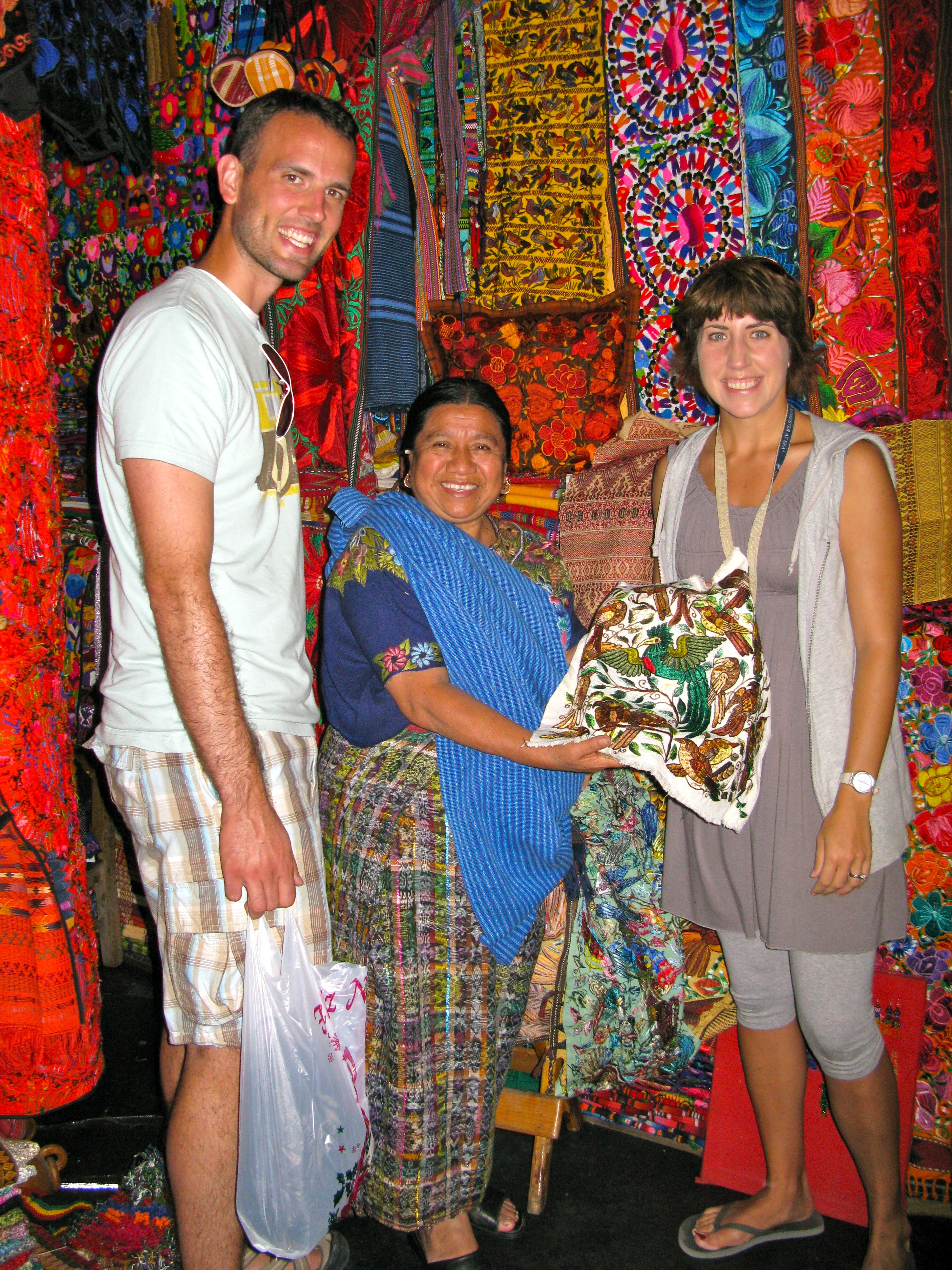
Our recent trip to León, Nicaragua proved that even a little Español can go a long way. We had a really fun time interacting with a couple of local ceramics artisans who were selling their wares on the town square. Our new friend Lisseth could speak a little English, and when we combined that with my stumbling recollection of a few Spanish terms here and there, we were able to make pretty good chit chat…slow and awkward though it was. Of course, Lisseth and Lazarro wanted us to buy some of their goods, and of course we did; it was beautiful stuff. But long after the transaction was over and done they stood there with us, smiling and struggling to understand and to be understood. The warm affection of these people and the excitement of bridging the communication gap made a lasting impression on us. Not only do we want to return to Nicaragua again–we want to make sure that next time we’re armed with decent linguistic abilities!

This man came up to Shannon and just kept talking and talking.  We didn't understand what he was saying, but then he started pointing at the camera.  Lisseth came over to help translate for him, and we found out that he just wanted to take a picture with a pretty lady.  ¡Qué Bonita!

This man came up to Shannon and just kept talking and talking. We didn't understand what he was saying, but then he started pointing at the camera. Lisseth came over to help translate for him, and we found out that he just wanted to take a picture with a pretty lady. ¡Qué Bonita!

From left to right, new amigos: Lisseth, Samuel, Lazarro, Shannon

From left to right, new amigos: Lisseth, Samuel, Lazarro, Shannon

05.27.09

Across the agua to Nicaragua, olé!

Posted in Travel at 11:05 pm by sam

Managua, Nicaragua, what a wonderful spot
There’s coffee and bananas and a temperature hot
So take a trip and on a ship go sailing away
Across the agua to Managua, Nicaragua, olé

We visited Corinto and León rather than Managua, but our tour guide Henry did perform a nice rendition of this little ditty as our bus hummed along the Pan-American Highway through the countryside on our way to the ruins of Old León. Nicaragua is a really cool place to visit because the tourism industry is just in its infancy. Visitors get a real taste of Central American life, and our guides regaled us with raw and honest stories about what it was like to grow up in a socialist society in the 1980s. As much fun as all of our ports of call have been, it was refreshing to not be held at bay behind a wall of what our new friend Ricardo refers to as “tourism branding” such as Jamaica’s “No problem, mon” and Costa Rica’s “Pura Vida.” For example, Henry told us about how his mother got interrogated by the police when he was a child because she was having her children learn English, “the language of The Enemy.” Also, he told us how the president of Nicaragua (Daniel Ortega–yes, he is also the current president) was convinced that the U.S. was planning a sudden invasion in 1985 and filled the streets of León with tanks as a preventative measure. We got a good picture of how scary this might have been for Henry, who was only 11 at the time. Henry’s elementary school had 70 students and 40 chairs. If you didn’t get to school early, you’d be standing all day in a scorching hot (only a little over 500 statute miles from the equator) school building. Since he lived quite a long distance from the school and was unlikely to ever arrive early to get a seat, his dad got hold of some wood and carved him a chair which he lugged back and forth every day on the hot and dusty dirt roads to the school house.

There is no doubt that most of Nicaragua is still heartbreakingly poor, but even more than any of the other countries we’ve visited, we found that a strong sense of optimism, pride, and friendliness toward visitors pervades every interaction with the local people. You get a sense from the Nicas (affectionate term they use to describe themselves) that they are on the up. Look out, folks! Nicaragua may be a late starter among its developing Central American neighbors, but it’s learning fast and will be booming quickly.

lion_statue

church_skyview

05.26.09

Fauna Galore

Posted in Travel at 10:50 pm by sam

On our last day in the area around Puntarenas, Costa Rica, we hired a private taxi to drive us to Villa Lapas in the forests of the Carara Biological Reserve. We enjoyed a private ecological walking tour across five hanging bridges nestled right in the rainforest. It was an exciting day of beautiful vistas and exotic animal sightings.

On the way to the park, we stopped at a bridge and looked down into the Río Tárcoles to see tons of enormous crocs swimming, fighting, and sunbathing.

On the way to the park, we stopped at a bridge and looked down into the Río Tárcoles to see tons of enormous crocs swimming, fighting, and sunbathing.

This little guy was hanging out on one of the bridges when we arrived.  He checked us out, we checked him out, and then he took off.

This little katamundi was hanging out on one of the bridges when we arrived. He checked us out, we checked him out, and then he took off.

We weren't actually quick enough to get a good zoomed in picture of the absolutely beautiful scarlet macaws we saw flying around the treetops, but this shot from cityparrots.org is a pretty good picture of what we saw.

We weren't actually quick enough to get a good zoomed in picture of the absolutely beautiful scarlet macaws we saw flying around the treetops, but this shot from cityparrots.org is a great visual of what we saw.

This mother poison dart frog is transporting her three young tadpoles to the top of a very large tree where she'll deposit them each in separate bromilliades that are holding enough water for the tadpoles to survive and sprout legs of their own.  Our guide, Andrei, was so excited to see a mother carrying her tads that he made us promise to e-mail him this picture.  It's a little blurry due to lower light conditions under the canopy and the inability to use a flash because it hurts the eyes of these fragile little creatures.

This poison dart frog is a mother--on her back you can see the three tadpoles she is transporting to the top of a very large tree. Once she is high enough, she'll deposit them each in separate bromilliades that are holding enough water for the tadpoles to survive and sprout legs of their own. Our guide, Andrei, was so excited to see a mother carrying her tadpoles that he made us promise to e-mail him this picture. It's a little blurry due to lower light conditions under the canopy and the inability to use a flash because it hurts the eyes of these fragile little creatures.

These cute little bats are so small and lightweight that a big palm leaf is all the shelter they need.

This little rufous tailed jacamar was another treat that got our guide, Andrei, really pumped.  There are two species of jacamar found in this part of Costa Rica, and the rufous tailed is by far the most rare...lucky us!  Andrei was jumping up and down after this guy flew away.

This little rufous-tailed jacamar was another treat that got our guide, Andrei, really pumped. There are two species of jacamar found in this part of Costa Rica, and the rufous-tailed is by far the most rare...lucky us! Andrei was jumping up and down after this guy flew away.

waterfall

« Previous entries Next Page » Next Page »